Olympus E-410
Introduction to the Four Thirds system
If you just want to see some photographs, skip straight to the results section.
Welcome to my first article of 2026! (Though all the photographs below where taken in autumn of 2025.)
The great majority of the DSLRs from Nikon, Canon, etc., were very clearly based on their preceding 35mm autofocus SLR architectures. This made a lot of sense as it enabled the legions of owners of said 35mm autofocus SLRs to use their existing lenses and accessories with their new (and very expensive!) digital wonders. But Olympus took a very different route…
Of course Olympus didn't have a lot of choice in the matter, because alone among the photographic big-boys they simply didn't have a successful 35mm autofocus SLR system to base a DSLR on. Olympus only ever launched one fully-integrated 35mm autofocus SLR, the OM707. This camera was an absolute distaster for Olympus that saw them withdraw very nearly entirely from the enthusiast and professional 35mm photography market. In fact I suspect that Olympus only barely survived the OM707 debacle at all.
But let's be glad they did survive! Because their lack a fully fledged 35mm autofocus SLR system to base a DSLR on lead them to do something unique in the photography world: they created a completely new digital SLR system developed from scratch around the needs of digital photography: the Four Thirds system. But note that I didn't call it the Olympus Four Thirds system, because this system was jointly developed by Olympus, Panasonic and Kodak (and, to a lesser extent, Fujifilm, Leica, Sanyo and Sigma) and was intended to be a sort of open standard that any company could sign up to and produce cameras, lenses or accessories for, rather than a proprietary system that one company controlled.
The ideal of an open system with multiple companies producing cameras and lenses was only partially successfully, and it seems only Olympus was fully committed. Olympus produced a total of 15 DSLR cameras, while Panasonic produced 2 and Leica just 1. The Four Thirds system was in production between 2003 and 2013, but it was already in a state of terminal decline when Olympus and Panasonic launched the Mirco Four Thirds system in 2009. But in that time Olympus introduced a number of new technologies, including the first interchangeable lens camera with a dust reduction system, and the first interchangeable lens camera with live-view.
Introduction to the Olympus E-410
| Announced | March 2007 |
|---|---|
| Camera type | Digital SLR |
| Camera size | 435 grams 130 x 91 x 53 mm (inc. battery) |
| Sensor type | LiveMOS |
| Sensor size | Four Thirds (17.3 x 13.0 mm) |
| Resolution | 3648 x 2736 (10 megapixels) |
| Memory card | Compact Flash (Type I or II) and xD Picture Card |
| Battery | BLS-1 |
| Lens | Interchangeable - Four Thirds mount |
| Full specifications | |
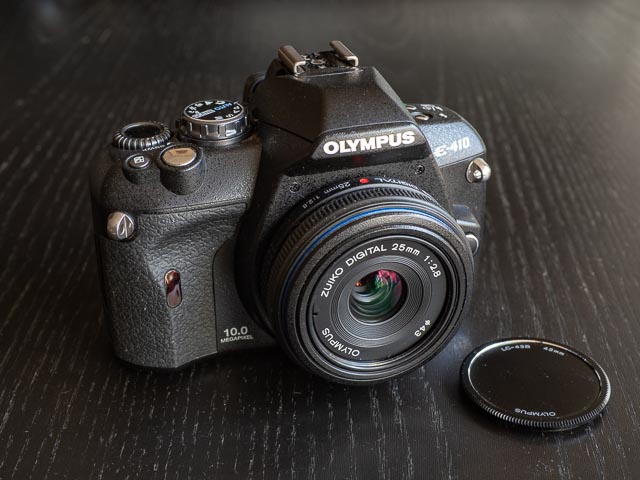
In September 2006 Olympus announced the first of a completely new line of Four Thirds cameras with the E-400. This camera effectively replaced the the E-330 to become both the entry point to the Four Thirds system, and their new baby… literally, since E-400 was not just Olympuses smallest DSLR, but the smallest DSLR ever made. The E-400 was Olympus' last DSLR with a Kodak CCD, and in March 2007 the camera you can see here was launched: the E-410. An almost identical camera but with the Kodak CCD sensor replaced with a Panasonic LiveMOS sensor which allowed Olympus to add a live-view mode to their baby DSLR. It's worth noting that Olympus US chose not to import the E-400 into North America, so for those on the other side of the pond, the E-410 was in fact the first camera in the E-4xx line.
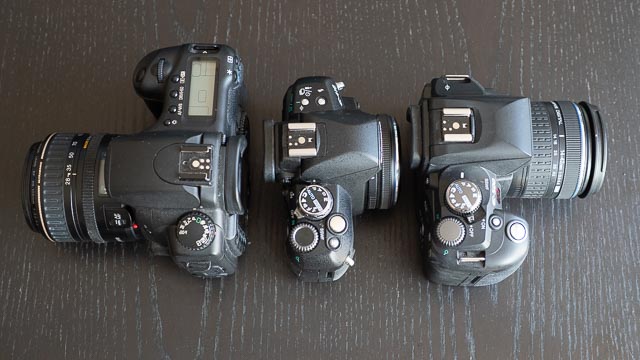 In March 2008 the E-4xx line was updated again with the introduction of the E-420, alongside which the 25mm f/2.8 pancake lens was launched, and this is the lens you can see on this page. Using Olympus' smallest DSLR along with their smallest DSLR lens really does produce a genuinely tiny package that rivals many modern mirrorless cameras for portability. To the left you can see how the Olympus E-4xx/25mm pancake combination compares to both a Canon EOS 20D (an example of what you might call a full-size APS-C DSLR) and an Olympus E-500 (earlier generation of Four Thirds DSLR). Plus, of course, you can add any lens in the Four Thirds catalogue for those times when a standard 50mm equiv. field of view just isn't enough.
In terms of general specifications you get something that broadly competitive pretty much every other entry level DSLR: so you have to put up with a pretty small and dark penta-mirror viewfinder, a largely plastic outer body, and a single comand dial interface. And to get those compact dimensions Olympus used a new battery, the BLS1, which is smaller and lower capacity than the BLM-1 used in their earlier entry-level DSLRs like the E-330.
Buying an Olympus E-410 in 2025
The E-410 is not a particularly sort after camera, so it tends to go for amongst the lower prices of any Olympus Four Thirds DSLR. This is not least because the proceeding E-400 model is the most recent, and highest resolution, camera to use Kodak's much venerated FFT CCD sensor (see my article about the Olympus E-500 which has the 8 megapixel version of this sensor), so it tends to get all the attention. Expect to pay £30-50 for the E-410 and double that for the E-400. The succeeding cameras in the E-4xx line (the E-420 and E-450) generally sit somewhere between those two extremes, value wise. Also don't forget that Olympus Four Thirds lenses also often go for premium prices, so whichever E-4xx camera you go for, it might be worth looking out for one which has one of Olympus' inexpensive ultra-compact kit lenses (i.e. the Zuiko Digital ED 14-42mm F3.5-5.6 and Zuiko Digital ED 40-150mm F4-5.6) that were launched alongside the E-410 included in the price.
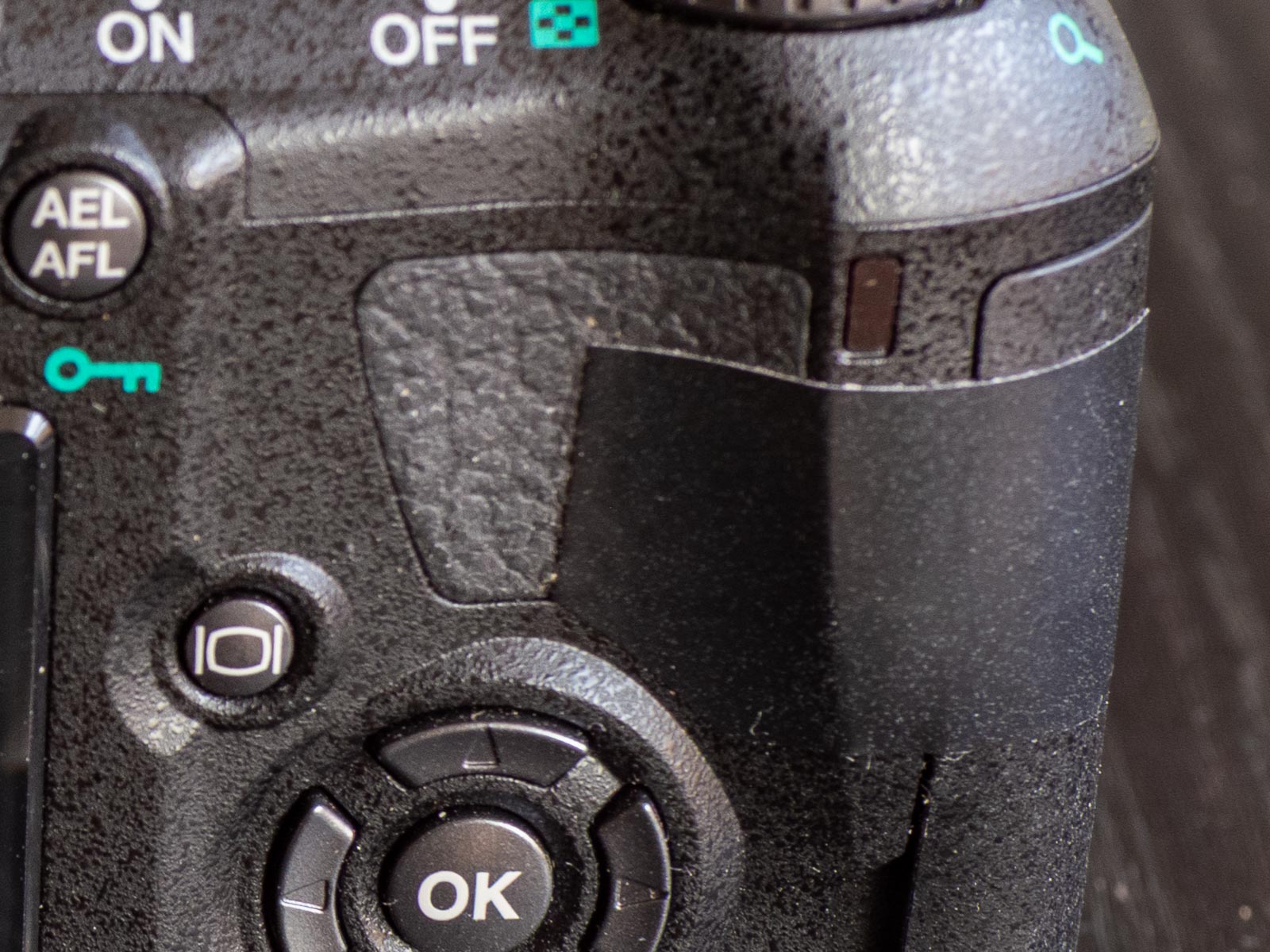 But there is a gotcha with the E-410: the battery door, which is prone to loosing its ability to stay snapped shut. Both the E-410s I have bought suffered from this problem. The first had to be returned because of other issues, but the second example I bought in September 2025, which you can see on this page, was otherwise in nice, fully working condition, and only cost £35.50 including p&p, so I decided to keep it. I use a piece of black electrical tape to discretely keep the battery door closed, and that seems to work pretty well. But this is still something to bear in mind. To what extent this problem affects the E-400, E-420 and E450 I really don't know, but based on my experience with the E-410 I would say it might be worth going for an E-420/E-450 even if you have to pay a little more, or maybe plumping for the E-400 if you don't mind paying quite a bit more for that Kodak CCD sensor.
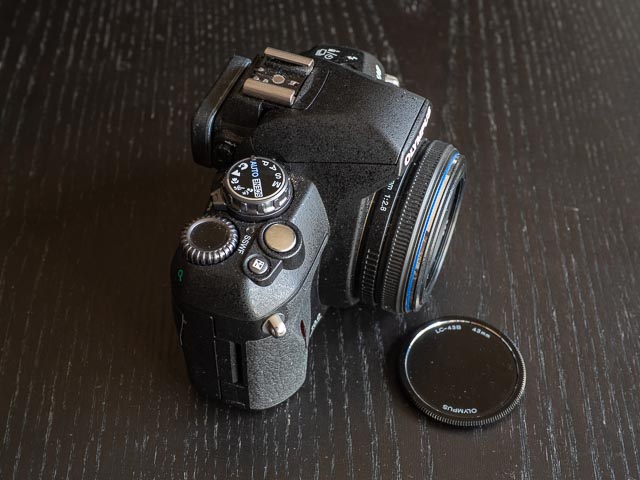
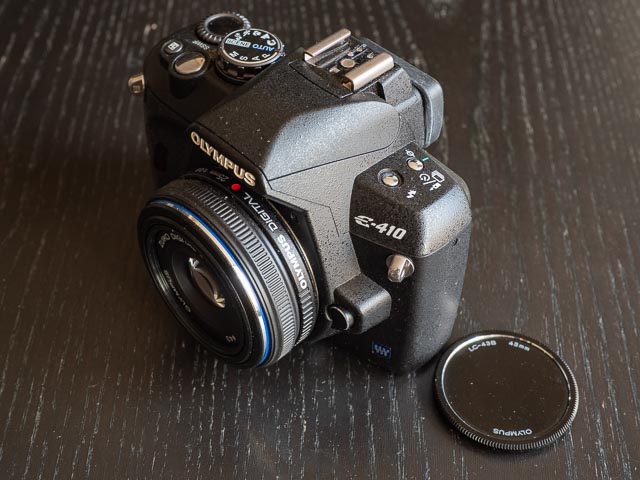
The 25mm f/2.8 pancake lens is perhaps the ideal compliment for any E-4xx camera as it keeps the camera's dimensions as compact as possible. And it goes in the other direction too: the 25mm pancake lens is so small that it tends to look a little ridiculous on any other camera! It's a semi-rare lens, so expect to pay £70-100 for a copy in nice condition. I suggest making sure it comes with the rather lovely LC-43B metal screw in lens cap that Olympus specially designed for this lens. I paid £68 for mine, including that LC-43B lens cap and p&p in August 2025. Olympus also made a diminutive matching metal lens hood called the LH-43, but I've never seen this the wild, and it's one of those tiny lens hoods that is more for decoration than really useful. Still, from a collecting perspective it would be nice to have!
Using an Olympus E-410 in 2025
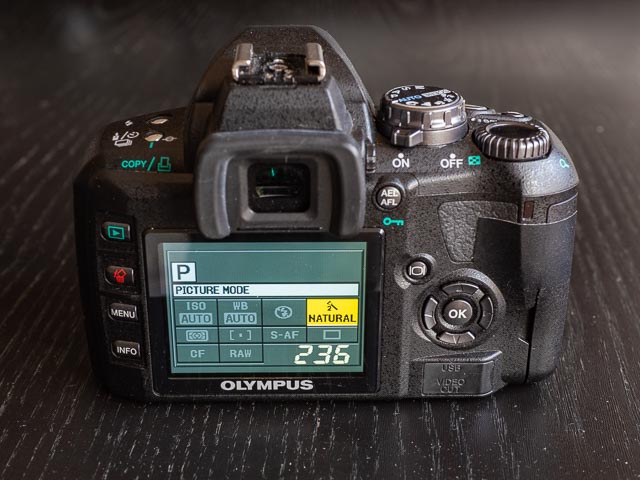 The first thing to say is that this camera really is tiny! When paired with the 25mm pancake lens it genuinely competes with many modern mirrorless cameras for portability. The camera is nicely built with a well designed quick settings menu activated by pressing the OK button in the centre of the four way controller on the back of the camera, all of which goes towards making this camera a very pleasent companion for day-to-day snap-shot photography.
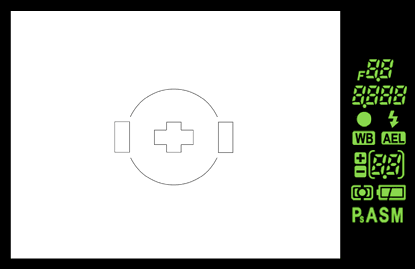 Now, there's no doubt that the viewfinder is small, dark and tunnel-like. And personally I've never been particularly fond of the vertical information display to the right of the viewfinder in this generation of Olympus Four Thirds camera. (I just can't stop my eye from automatically look for this information at the bottom of the viewfinder, where it's found on almost every other camera!) But while this isn't the kind of viewfinder you can use to confidently focus manually, it still works just fine with for framing your shots with auto-focus.
And for those moments when you really do need to nail focus manually, this camera enjoys live-view. It's a much improved version compared to earlier generations of Olympus/Panasonic/Leica cameras (such as the Leica Digilux 3). In particular you get autofocus, though it's a slight clunky experience as the monitor blacks out when the mirror flips up to allow phase detect auto-focus to operate. But manual focusing in controlled circumstances, such as table-top photography using a tripod and a macro lens, is where live-view really shines anyway. For every-day walk-around photography the optical SLR viewfinder and autofocus work very nicely, thank you.
It's worth bearing in mind that the baby Olympus DSLR doesn't have image stabilisation, and neither do any Olympus Four Thirds lenses (you need to put a Panasonic-Leica Four Thirds lens on your E-410 if you want image stabilisation). But somehow photographers got sharp photos without image stabilisation for decades before it became a thing, and you know what? You will too with this camera! Particularly for the kind of snap-shot photography this camera is so well suited to.
When I took the E-410 out for a walk around my home city of Edinburgh I decided to stick solely with that lovely 25mm pancake lens. After years of using zoom lenses of all kinds, it somehow always surprises me how versatile such a simple, compact and easy to carry combination like this really is. And despite the relatively slow maximum aperture of f/2.8 you can still get some really nice bokeh, at least at reasonably close focusing distances. And although it's far from being a macro lens, this lens can focus usefully close. So all round I found this combination really nice to use for for those times you just want to keep things compact, light-weight and simple.
Olympus E-410 results
But what are the results like. Panasonic, Olympus and Leica have all boasted in their sales brochures about how the 'LiveMOS' sensor combines the colours and performance of CCD sensors with the energy efficiency of CMOS sensors. Of course such claims are highly subjective and impossible to conclusively prove, but never-the-less I was very pleased with the results from the E-410/25mm combo. The 25mm pancake lens doesn't have a great reputation for sharpness and detail resolution, but I found it a really lovely lens to use and capable of very nice results. And despite the relatively limited maximum aperture of f/2.8, it's capable of generating some very nice bokeh, at least at close focusing distances.

f/2.8 - 1/50 - ISO200
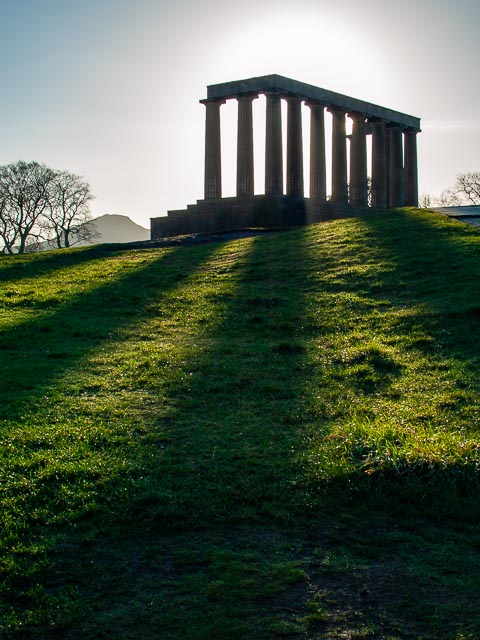
f/8 - 1/400 - ISO100

f/6.3 - 1/320 - ISO100

f/2.8 - 1/80 - ISO100
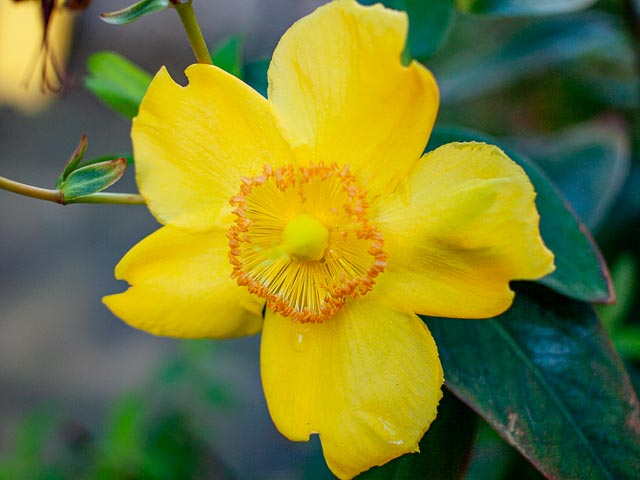
f/2.8 - 1/200 - ISO100

f/2.8 - 1/125 - ISO100

f/2.8 - 1/2500 - ISO100

f/2.8 - 1/250 - ISO100

f/2.8 - 1/2000 - ISO100

f/2.8 - 1/80 - ISO100
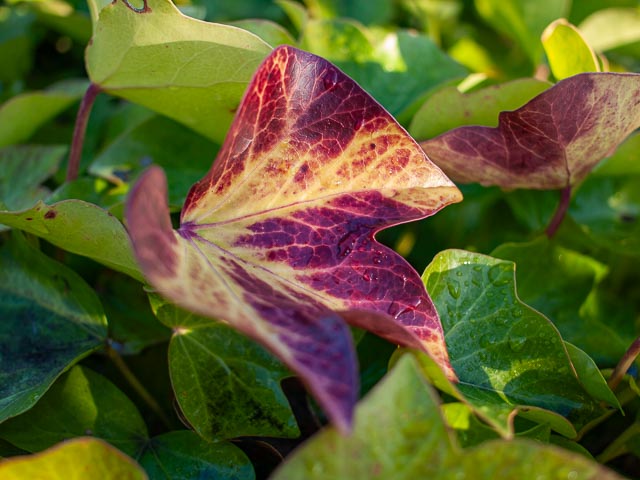
f/2.8 - 1/250 - ISO100

f/3.2 - 1/80 - ISO100

f/2.8 - 1/60 - ISO200

f/2.8 - 1/160 - ISO100
Links
- Wikipedia page on the Four Thirds system.
- Olympus E-410 contemporary review (on dpreview.com)
- Olympus E-410 contemporary review (on ePHOTOzine)
- Olympus E-410 contemporary review (on Imaging Resource)
- Olympus E-410 contemporary review (on Photography Blog)
- Olympus Zuiko Digital 25mm f/2.8 review (on biofos.com)
- Olympus E-410 Instruction Manual (PDF)